
How Environmental Toxins Accumulate in the Human Body

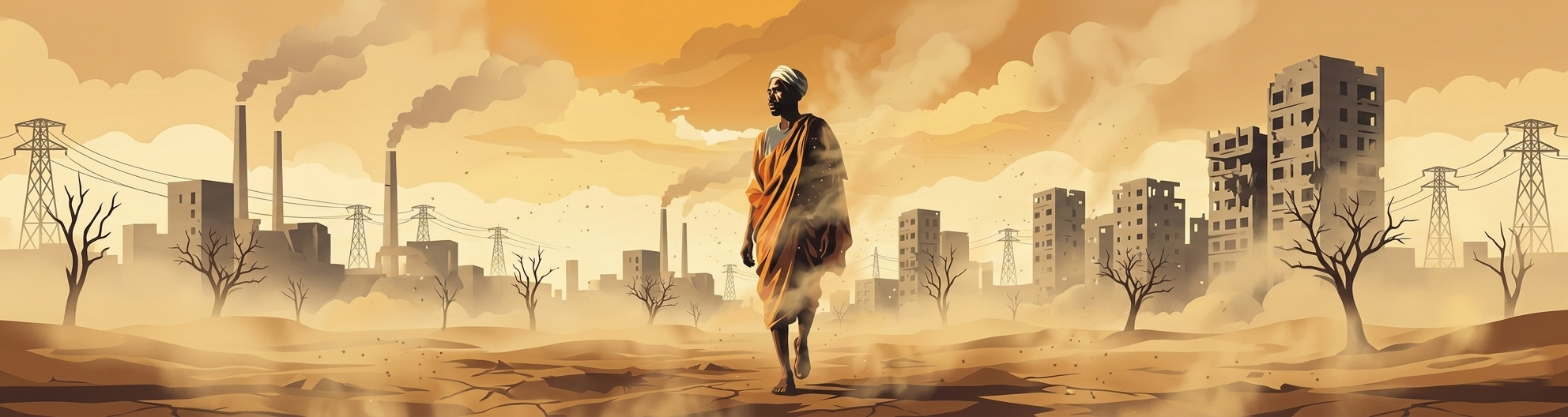
Samuel Kipchoge, 54, has never worked in a factory. He has never lived near an industrial site. He has never handled chemicals or sprayed pesticides or done any of the things we associate with toxic exposure.
He is a farmer in Uasin Gishu. He grows maize. Keeps a few cows. Drinks water from a borehole on his land. By any reasonable measure, he should be healthy.
But Samuel has been sick for years. Not with anything dramatic. No cancer. No organ failure. No diagnosis that explains itself. Just a slow, grinding decline. Fatigue that sleep does not fix. Joint pain that moves from place to place. Headaches that arrive without warning. A sense that his body is heavier than it should be.
"Doctors run tests," he says, sitting on a wooden bench outside his house. The afternoon sun casts long shadows across his maize fields. "Everything comes back normal. They say I'm fine. But I don't feel fine."
Samuel is not imagining his symptoms. He is experiencing something that modern medicine is only beginning to understand. The slow, silent accumulation of environmental toxins in human tissue.
Over 60 years of life, Samuel has consumed food grown in soil contaminated by decades of pesticide use. He has drunk water carrying traces of agricultural runoff. He has breathed air that contains industrial emissions transported hundreds of kilometers by wind. He has handled products packaged in plastics that leach chemicals into their contents. He has slept on a mattress treated with flame retardants. Worn clothes washed in synthetic fragrances. Walked on floors where household dust collects a cocktail of chemicals from furniture, electronics, and cleaning products.
None of these exposures, alone, would be enough to make him sick. But they do not act alone. They accumulate. They combine. They concentrate in his tissues. Layer upon layer. Year upon year. Until the body that was designed to handle occasional toxins becomes a permanent storage facility for substances it was never meant to hold.
Samuel is not the exception. We are all, to varying degrees, walking repositories of accumulated poison.
What Accumulation Actually Means
The word "accumulation" sounds abstract. It is not. It describes a specific biological process with measurable consequences.
When you are exposed to a toxic substance, through food, water, air, or skin contact, your body attempts to process and eliminate it. The liver works to break it down. The kidneys work to filter it out. The digestive system works to move it along.
These systems are effective, up to a point. They evolved over millions of years to handle the natural toxins present in the environment. Plant compounds. Microbial byproducts. Minerals in water. But they did not evolve to handle the volume and variety of synthetic chemicals that characterize modern life.
When the rate of exposure exceeds the rate of elimination, storage begins.
The body, unable to process and excrete everything in real time, starts sequestering toxins in tissues where they will do the least immediate harm. Fat tissue is a favorite repository. It safely stores fat-soluble toxins away from vital organs. Bone tissue holds heavy metals. The liver and kidneys, ironically, accumulate toxins they are trying to process. Even the brain, protected by the blood-brain barrier, is not immune.
"Bioaccumulation is the process of gradual buildup of materials in the bodies of living things over time including heavy metals, persistent organic pollutants and other toxic chemicals," explains a 2022 review in ScienceDirect. "They are regularly difficult to degrade, as well as lipophilic, that is, they concentrate in fatty tissues and increase as they ascend trophic levels."
This is not a theory. It is documented biology. Studies of human tissues consistently find scores of synthetic chemicals present in measurable concentrations. Pesticides. Plasticizers. Flame retardants. Heavy metals. Industrial byproducts. In people with no known occupational exposure.
The question is not whether these substances accumulate. The question is what they do once they are inside.
The Map of Accumulation
Different toxins have different preferred storage sites. Understanding where they hide helps explain the symptoms they cause.
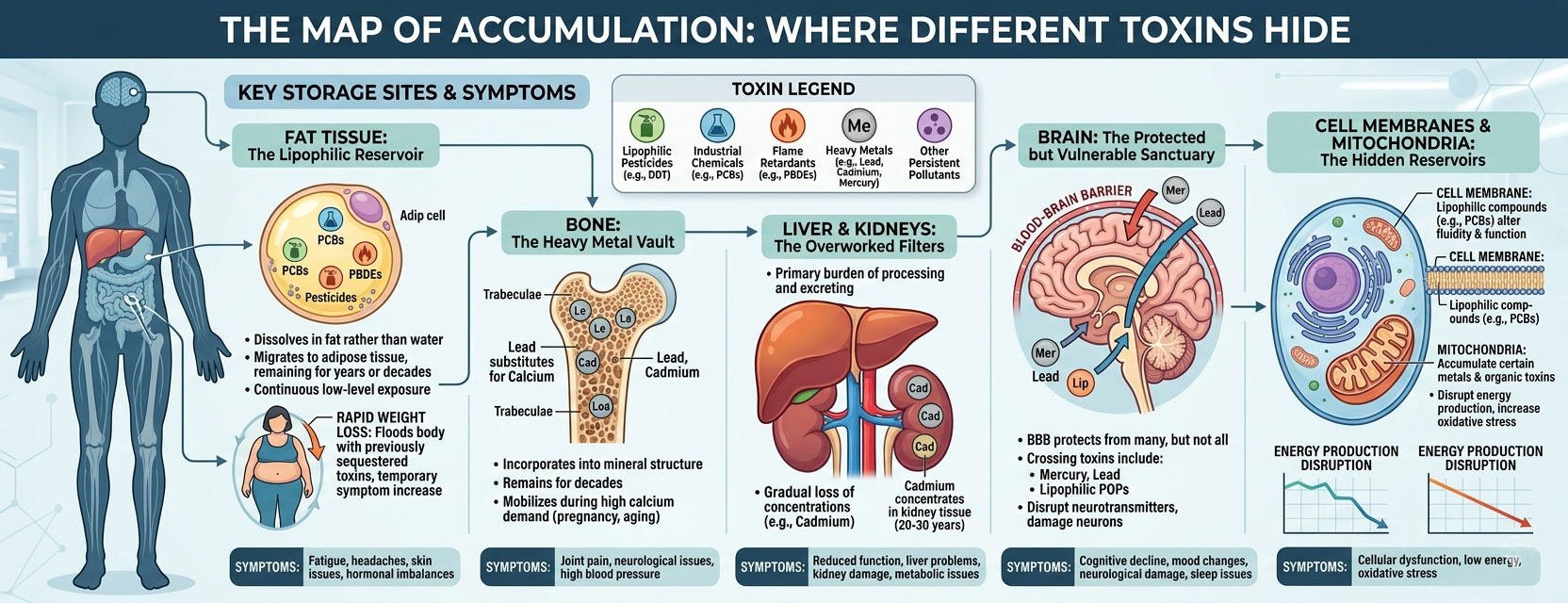
Fat Tissue: The Lipophilic Reservoir: Many of the most persistent environmental toxins are lipophilic. They dissolve in fat rather than water. This includes many pesticides like DDT and organochlorines. Industrial chemicals like PCBs. Flame retardants like PBDEs.
Once these substances enter the body, they migrate to adipose tissue, where they can remain for years or decades. From this storage site, they slowly leach back into the bloodstream over time, creating a continuous low-level exposure long after the original source is gone.
"When a person loses weight, these stored toxins are released into circulation," explains a 2021 study on pollutant distribution. "This is one reason rapid weight loss can sometimes cause temporary increases in symptoms. The body is flooded with toxins that were previously sequestered."
Bone: The Heavy Metal Vault: Bone tissue actively incorporates certain heavy metals, particularly lead and cadmium, into its mineral structure. Lead, for example, substitutes for calcium in bone matrix and can remain there for decades.
During periods of high calcium demand, pregnancy, breastfeeding, aging, or simply when dietary calcium is low, the body mobilizes bone tissue, releasing stored lead back into circulation. This is why women with past lead exposure can show elevated blood levels during pregnancy, exposing their fetuses to toxins that entered their bodies years earlier.
Liver and Kidneys: The Overworked Filters: The liver and kidneys bear the primary burden of processing and excreting toxins. As a result, they accumulate substantial concentrations of many substances. Cadmium, for instance, concentrates in kidney tissue, where it can remain for 20 to 30 years.
This creates a cruel irony. The organs responsible for detoxification become storage sites for toxins, gradually losing function as accumulation progresses.
Brain: The Protected but Vulnerable Sanctuary: The blood-brain barrier protects the brain from many substances, but not all. Heavy metals like mercury and lead cross this barrier. So do many lipophilic persistent organic pollutants. Once inside brain tissue, these substances can disrupt neurotransmitter function, damage neurons, and contribute to neurodegenerative processes.
Cell Membranes and Mitochondria: The Hidden Reservoirs: Recent research using high-resolution imaging techniques has revealed that toxins accumulate not just in organs, but within specific cellular compartments. Cell membranes absorb lipophilic compounds, altering their fluidity and function. Mitochondria, the power plants of cells, accumulate certain metals and organic toxins, disrupting energy production and increasing oxidative stress.
"Mitochondrial damage induced by toxins is a key mechanism in many chronic diseases," notes a 2019 study on combined toxin exposure. "When mitochondria are damaged, cells cannot produce enough energy, and they generate excessive reactive oxygen species that damage surrounding structures."
Martha's Story
Martha, 47, a teacher in Kericho, spent five years trying to understand why she was always exhausted.
"It wasn't normal tiredness," she says. "It was the kind of tired where your limbs feel heavy, where your brain won't focus, where you have to lie down after simple tasks. My students would ask if I was sick. I started to think I was dying."
Doctors tested her for everything. Thyroid. Anemia. Diabetes. Autoimmune conditions. Even sleep disorders. Everything came back normal. One doctor suggested depression and prescribed antidepressants. They did nothing.
A friend told her about environmental toxins. Martha was skeptical but desperate. She found a practitioner who tested her for heavy metals. The results showed elevated levels of mercury and lead.
"I had never worked with either," she says. "I did not have amalgam fillings. I did not eat a lot of fish. Where did it come from?"
The answer, she later learned, was cumulative exposure over decades. Mercury from contaminated fish. Lead from old water pipes and soil. Both substances slowly accumulating in her tissues, eventually reaching levels that disrupted mitochondrial function.
Research confirms what Martha experienced. Heavy metals interfere with mitochondrial enzymes, disrupt the electron transport chain, and increase oxidative stress. The result is exactly what she described. Profound fatigue that rest cannot fix, because the cells themselves cannot produce energy efficiently.
How Accumulated Toxins Disrupt Function
Once toxins accumulate in tissues, they do not simply sit there harmlessly. They actively interfere with cellular processes through multiple mechanisms.
Oxidative Stress and Mitochondrial Damage: Many toxins generate reactive oxygen species. Unstable molecules that damage DNA, proteins, and cell membranes. This oxidative stress, when chronic, overwhelms the body's antioxidant defenses and accelerates aging at the cellular level.
A 2022 study on mycotoxin exposure found that co-exposure to multiple toxins "significantly reduced mitochondrial activity, increased intracellular ROS levels, and activated the mitochondrial-dependent caspase signaling pathway, ultimately leading to enhanced apoptosis."
This is technical language for a simple reality. Accumulated toxins cause cells to self-destruct.
Endocrine Disruption: Many environmental chemicals, including bisphenol A (BPA), phthalates, and certain pesticides, mimic or block natural hormones. They bind to hormone receptors, triggering inappropriate responses, or block receptors, preventing natural hormones from doing their work.
"Pesticides often act as endocrine disruptors, affecting hormonal function, development, and fertility," explains a 2020 public health report. "These substances are often ingested daily and in various combinations. Limit values are usually determined based on the effects of individual substances, but in real life, people are exposed to multiple substances simultaneously over long periods."
Nutrient Displacement: Some toxins interfere with nutrient absorption and metabolism. Lead competes with calcium and iron for absorption sites. Cadmium displaces zinc in enzyme systems. Arsenic disrupts vitamin A metabolism.
This creates a double burden. Toxins accumulate while essential nutrients are depleted. The body becomes simultaneously toxic and deficient.
DNA Damage and Mutagenesis: Certain toxins directly damage DNA. Aflatoxins, produced by fungi that contaminate maize and groundnuts, form DNA adducts. Chemical bonds that distort the DNA structure and cause mutations during replication. This is why aflatoxins are among the most potent liver carcinogens known.
Heavy metals like arsenic and cadmium also cause DNA damage, primarily through oxidative stress mechanisms. Over time, accumulated damage increases cancer risk.
Immune Dysregulation: The gut microbiome, trillions of bacteria that regulate immune function, synthesize vitamins, and metabolize nutrients, is highly vulnerable to environmental toxins. Pesticides, heavy metals, and plasticizers alter microbial composition, reducing beneficial species and allowing pathogenic ones to proliferate.
"Disruptions to microbial balance by toxicants may compromise intestinal integrity, nutrient synthesis, and immune regulation," notes a 2022 review. "The gut microbiome emerges as a key mediator in this nexus, influencing both nutrient metabolism and the biotransformation of toxicants."
The Endotoxin Factor: When the Body Makes Its Own Poisons
Environmental toxins are not the whole story. The body also generates its own toxic compounds through normal metabolism. And these, too, accumulate when clearance systems are overwhelmed.
This is the domain of endogenous toxins. Substances produced within the body that become harmful when they accumulate. Homocysteine, for example, is a normal metabolic intermediate that, when elevated, damages blood vessels and increases cardiovascular risk. Uric acid, at normal levels an antioxidant, becomes inflammatory when concentrations rise.
A 2022 study on uremic toxins, compounds that accumulate in kidney failure, found that even at low concentrations, substances like indoxyl sulfate trigger inflammation and cellular aging.
"Indoxyl sulfate alone induced the release of reactive oxygen species and low-grade inflammation in macrophages," the researchers reported. "Further experiments revealed that indoxyl sulfate might induce senescence in parenchymal cells and therefore participate in the progression of inflammaging."
This is a crucial insight. Accumulated toxins, whether from external sources or internal metabolism, create a self-perpetuating cycle of inflammation and cellular dysfunction. The more they accumulate, the less effectively the body eliminates them, and the more they accumulate further.
Where All These Toxins Come From

The list of sources is long, but naming them is essential. We cannot address what we refuse to see.
- Food is the primary exposure route for most people. Heavy metals accumulate in crops grown on contaminated soil. Lead in leafy vegetables. Cadmium in rice and grains. Arsenic in rice. Pesticide residues remain on fruits and vegetables even after washing. Mycotoxins contaminate maize, groundnuts, and spices. Processed foods contain additives, preservatives, and compounds formed during high-temperature cooking like acrylamide.
- Water carries industrial pollutants, agricultural runoff, and in some areas, naturally occurring arsenic. Even treated water can contain disinfection byproducts and traces of pharmaceuticals.
- Air transports industrial emissions, vehicle exhaust, and household pollutants. Polycyclic aromatic hydrocarbons from burning fuel settle onto surfaces and into lungs. Volatile organic compounds from paints, cleaners, and furnishings accumulate in indoor air.
- Household dust is a concentrated cocktail of everything present in the home. Flame retardants from furniture. Phthalates from plastics. Pesticide residues tracked in from outside. Heavy metals from old paint. Young children, who play on floors and put hands in mouths, are particularly exposed.
- Personal care products deliver phthalates, parabens, and synthetic fragrances directly through skin. Cosmetics may contain heavy metals as contaminants. Antibacterial soaps add triclosan to the body's burden.
- Packaging leaches chemicals into food and drinks. BPA from can linings and plastic containers. Phthalates from plastic wraps. PFAS from greaseproof papers and fast-food wrappers.
- Textiles and furnishings release flame retardants and stain repellents into household air and dust. New furniture, electronics, and clothing all add to the load.
Omondi's Story
Omondi, 62, retired in Kisumu two years ago. He spends his days tending a small garden, visiting friends, and helping his daughter care for his grandchildren.
A year ago, his granddaughter was diagnosed with a developmental delay. Doctors asked about environmental exposures. John looked at his home with new eyes.
"The house was built in 1985," he says. "The paint was old. Probably lead-based. The furniture was treated with something to make it fireproof. The floors were vinyl, which I later learned can contain phthalates. We ate from plastic plates, stored food in plastic containers, microwaved in plastic. We used pesticides in the garden. We burned mosquito coils at night."

He pauses.
"I had never thought about any of it. It was just normal life. But when I added it all up, 50 years of normal life, I started to understand why so many of us are sick."
John's realization is the central insight of accumulation theory. The danger is not in any single exposure. It is in the totality. The body can handle occasional insults. It cannot handle constant, cumulative, multiple exposures across every domain of life. Year after year after year.
Why We Don't Notice Until It's Late
Accumulation is insidious because it happens slowly. No single meal makes you toxic. No single day of breathing polluted air causes disease. The process unfolds over years, decades, a lifetime. And by the time symptoms appear, the burden is already substantial.
This is why traditional medicine often misses the connection. Tests measure what is in your blood at a single moment. A snapshot. But toxins stored in fat, bone, and tissues do not appear in blood tests unless they are actively being mobilized. A person can carry decades of accumulated lead in their bones while showing normal blood levels.
The symptoms of accumulation are the symptoms of modern chronic disease.
- Fatigue that rest does not fix.
- Brain fog and memory problems.
- Unexplained aches and pains.
- Headaches with no clear trigger.
- Digestive issues that come and go.
- Mood disturbances, anxiety, depression.
- Chemical sensitivities.
- Allergies and autoimmune reactions.
- Hormonal imbalances.
- Weight that will not shift.
These are not unrelated conditions. They are different expressions of the same underlying reality. A body overwhelmed by accumulated toxins. Struggling to function in an internal environment that has become hostile.
The Expert View
Dr. Mukiri, an integrative medicine practitioner in Nairobi, has treated hundreds of patients with chronic unexplained illness.
"The single biggest mistake in modern medicine is treating symptoms while ignoring the toxic burden," he says. "We give drugs for pain, for inflammation, for high blood pressure, for depression. But the drugs do not remove the underlying toxins. They just suppress the body's attempts to signal that something is wrong."
He draws a parallel to a river.
"If a river is polluted, you can treat the fish that are dying. You can give them medicines, support them, keep them alive longer. But until you stop polluting the river and clean what has accumulated, the fish will continue to die. Our bodies are the fish. The environment is the river."
Dr. Wanjiku Mwangi, a clinical psychologist, notes the psychological dimension.
"Patients who are told their tests are normal but they do not feel normal often internalize the message that it is their fault. They think they are weak, or lazy, or depressed. They blame themselves for symptoms that have a physical cause. Understanding accumulation theory is liberating for them. It says: you are not broken. You are just overloaded. And there are things you can do about that."
A 2022 review in ScienceDirect concludes with a call to action.
"The effects of environmental pollution and nutritional deficiencies are particularly high in the population of the polluted areas, as these individuals have less access to food rich in nutrients, particularly in lower-to-middle-income nations. Moreover, the bioaccumulation of toxicants via the food chain, especially in fish, livestock and agricultural products, is also a paradox in that healthy foods can also subject individuals to high levels of toxicants. Since the world is facing a crisis of environmental pollution and malnutrition, there is a pressing need to embrace integrative models that can explain toxicological risk and nutritional status simultaneously."
Return to Samuel
Samuel Kipchoge, the farmer in Uasin Gishu, has not solved his health problems. But he has begun to understand them.
He learned about accumulation theory from a friend. He read about the sources, the storage sites, the mechanisms of disruption. He started to connect his symptoms, the fatigue, the aches, the fog, with the lifetime of exposures he had never considered.
"I grew up on a farm," he says. "We used pesticides without protection. We stored food in whatever containers we had. We burned plastic for fuel when firewood was scarce. We drank water from streams that ran through cultivated land. We did what everyone did. We never thought about what was building up inside."
He has started making changes. He buys food from farmers he trusts. He filters his water. He avoids plastic containers. He grows more of his own vegetables, using traditional methods without chemicals.
"It's slow," he says. "I do not expect to undo 60 years in six months. But at least now I understand what I am dealing with. At least now I know why I feel the way I feel."
The Conclusion
The human body is remarkable. It can process and eliminate an astonishing range of substances. It can adapt to challenging conditions. It can heal from significant insults.
But it has limits. Those limits are being exceeded. Daily. By the constant, cumulative, multiple exposures of modern life.
The toxins accumulate. They hide in fat and bone and cells. They disrupt mitochondria and hormones and DNA. They create a chronic burden that manifests as chronic disease.
This is not alarmism. Study after study confirms what accumulation theory describes. We are, all of us, walking repositories of substances our ancestors never encountered. Carrying loads our bodies were not designed to bear.
The implications are profound. If chronic disease is, at least in part, a consequence of accumulated toxicity, then treatment must address accumulation. Suppressing symptoms is not enough. The burden must be reduced. The terrain must be cleared. This is not a quick fix. It is not a pill. It is not a program to buy or a protocol to follow. It is a fundamental rethinking of what makes us sick and what might make us well.
In Uasin Gishu, Samuel continues his slow work. In Kericho, Martha monitors her energy. In Kisumu, John wonders about his grandchildren's future.
They are not waiting for a cure. They are learning to live with the knowledge of what has accumulated. And the slow, patient work of reducing the load.
Outside, the evening is ordinary. The maize rustles in the wind. The children play. And inside each body, the quiet accumulation continues. Slowed, perhaps, but never fully stopped.
The question is not whether toxins have accumulated. The question is what we will do about it.
The Accumulation Theory in Brief
| Element | Description |
|---|---|
| Definition | Bioaccumulation is the gradual buildup of environmental toxicants in living tissues over time, particularly substances that are difficult to degrade or are lipophilic. |
| Storage Sites | Fat tissue (lipophilic compounds), bone (heavy metals), liver, kidneys, brain, cell membranes, mitochondria. |
| Key Sources | Contaminated food and water, air pollution, household dust, personal care products, packaging, textiles, furnishings. |
| Major Toxicants | Heavy metals (lead, mercury, cadmium, arsenic), pesticides, mycotoxins, plasticizers (BPA, phthalates), flame retardants (PBDEs), PFAS, industrial byproducts (PCBs). |
| Mechanisms of Harm | Oxidative stress, mitochondrial damage, endocrine disruption, nutrient displacement, DNA damage, immune dysregulation. |
| Health Consequences | Fatigue, cognitive impairment, metabolic dysfunction, hormonal imbalance, inflammation, increased cancer risk, neurodegenerative disease. |
| Key Insight | Chronic disease often results from cumulative toxicity, not single exposures. Symptoms are suppressed by drugs while underlying burden continues to accumulate. |
This article is for informational purposes only and is not medical advice. Accumulation Theory is a framework for understanding environmental health impacts, not a diagnosis or treatment protocol. Consult qualified healthcare providers for health concerns.