
The Volcanic Treasure of Ethiopia's El Sod Crater

The House of Salt
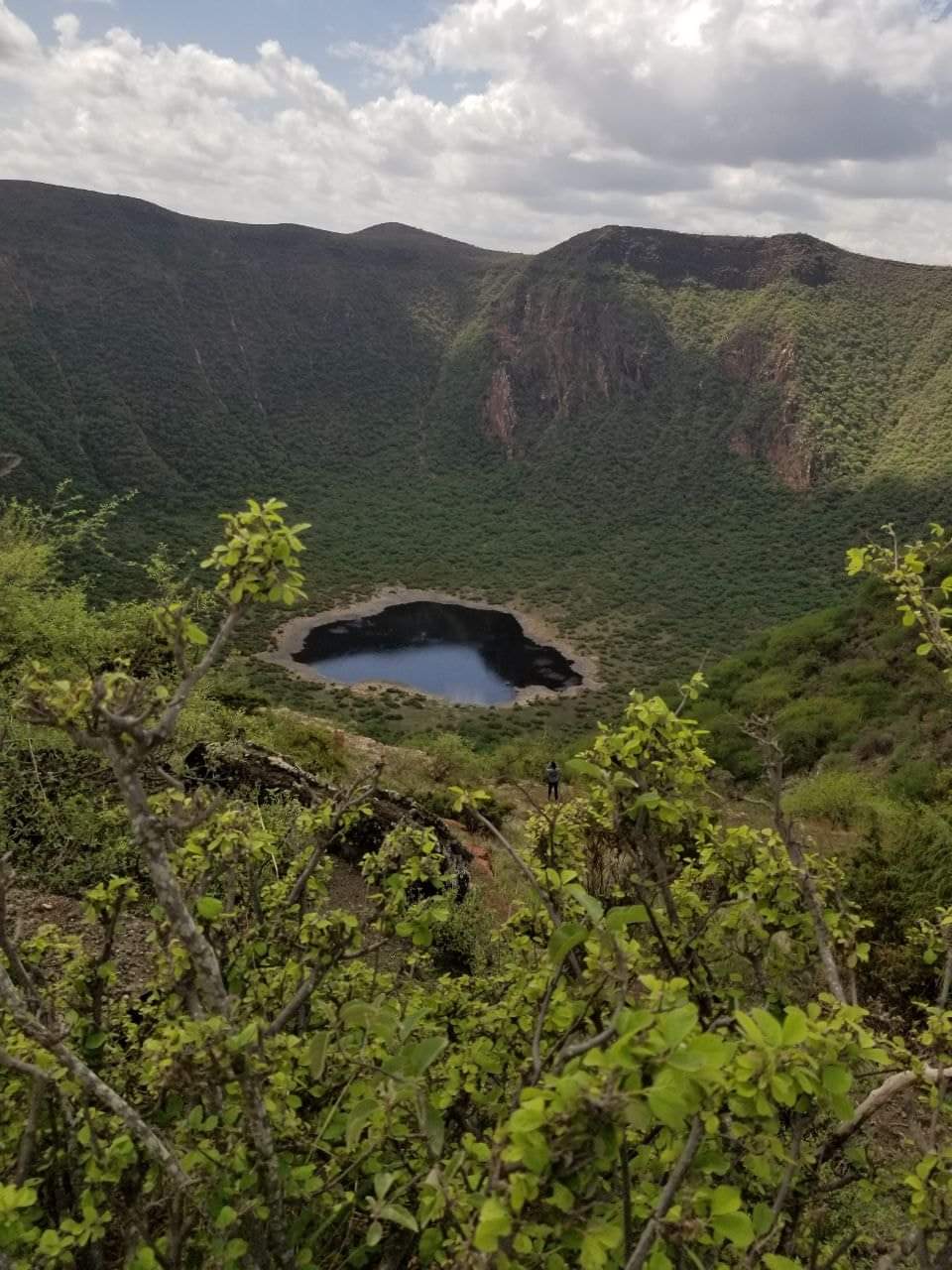
In the southern reaches of Ethiopia, near the border with Kenya, the earth opens into a vast depression. This is El Sod, an inactive volcanic crater whose name in the local Borana language means "the house of salt."
From above, the crater reveals a stark landscape of black rock and ochre soil. But at its center lies something unexpected: a dark lake, its surface still and mysterious, hiding in its depths a treasure that has drawn people here for centuries.
This is no ordinary lake. Its waters are so saturated with minerals that they appear black and slimy, and beneath their surface lie deposits of raw salt crystals that have been harvested by the Borana people for over a thousand years.
This is Black Salt from Boke. And in the Terrain Repair Method, it represents something truly unique: a salt born of volcanic fire, harvested by divers who plunge into dark waters, and prized for its distinctive mineral profile and traditional uses that span both human and animal health.
How an Ox Discovered Salt
Like many traditional foods with deep cultural significance, the discovery of Boke salt is wrapped in legend.
According to Borana oral tradition, more than a thousand years ago, a shepherd noticed something unusual about one of his oxen. The animal, which had wandered away from the herd, returned looking different—stronger, healthier, somehow changed from the rest.
The shepherd followed the ox back to where it had been grazing. There, hidden from ordinary view, lay the El Sod crater. The ox had found the salt deposits and had been consuming them. Its transformation was so remarkable that the shepherd recognized immediately that this place held power.
From that day forward, the Borana people have harvested salt from El Sod—for their own consumption, for their cattle, and for trade with neighboring communities. The knowledge has been passed down through generations, preserved through centuries of change.
The Crater and Its Lake
El Sod is a volcanic crater, a remnant of ancient geological activity that shaped this region millions of years ago. The crater floor contains a shallow lake fed by underground springs that rise through volcanic deposits, dissolving minerals along their journey.
What makes this lake extraordinary is its chemistry. The water is dark and alkaline, rich in dissolved minerals that precipitate out as the water evaporates in the hot, dry climate. At the bottom of the lake, layers of raw salt crystals accumulate—the raw material that divers risk their safety to retrieve.
The crater's name, "house of salt," reflects its central place in Borana culture. It is not merely a source of a commodity. It is a landmark, a gathering place, a site of memory and tradition.
The Harvesting Process
The Divers of El Sod
The extraction of salt from El Sod is not for the faint of heart. Unlike surface salt pans where crystals can simply be collected, the salt at El Sod lies beneath the dark waters of the crater lake.
During the harvest season, which peaks at the end of the rainy season from December to January, specially trained divers descend into the lake. The water is deep enough that they must submerge completely, holding their breath while they dig the muddy salt from the bottom.
This is dangerous work. The water is dark, reducing visibility to near zero. The mud is thick and clinging. The weight of the salt must be managed carefully to prevent sinking or becoming trapped. Only experienced harvesters, who have learned the techniques from elders and practiced for years, can perform this task.
From Mud to Crystals
Once the salt-laden mud is brought to the surface, the real work begins. The black mud is processed using water to separate the salt crystals from the clay and organic matter. This is a skilled operation—too much water and the salt dissolves away; too little and the impurities remain.
The separated crystals are then crushed using traditional tools: a stone pestle grinding against another stone or a wooden surface. This hand-crushing produces salt of varying grain sizes, from fine powder to small crystals, depending on the intended use.
Finally, the crushed salt is spread in the sun to dry. The bright Ethiopian sun completes the process, evaporating any remaining moisture and leaving behind the finished product: Black Salt from Boke.
The Three Grades
The Borana producers distinguish three different types of salt according to quality:
- Ilkole: The highest grade, used for human consumption and cooking. This is the finest, purest salt, carefully processed and selected.
- Middle grade: Used for both human and animal consumption, depending on availability.
- Lower grade: Primarily used for animals, though still valued for its mineral content.
This grading system reflects a sophisticated understanding of salt quality that has been refined over generations. The best salt, ilkole, is what we source for the Terrain Repair Method.
The Cooperative
In 2009, recognizing the value of their traditional knowledge and the need to preserve it for future generations, expert salt extractors formed a cooperative. The cooperative consists of 63 producers who work together to harvest sustainably, share knowledge, and protect the crater from overexploitation.
The cooperative members are able to detect the best quality salt and determine the right time for extraction. Their goal is to safeguard the area and ensure that this ancient practice continues for another thousand years.
The Mineral Profile
What Makes Black Salt Black
The distinctive dark color of Boke salt comes from its mineral composition. Unlike pure white table salt, which has been stripped of everything but sodium chloride, black salt retains the full spectrum of minerals present in the volcanic lake.
These include:
- Iron compounds: Contributing to the dark color and providing essential mineral nutrition
- Sulfur compounds: Present in trace amounts from the volcanic origin
- Magnesium: In forms that may appear darker than pure white salts
- Various trace elements: Each contributing slightly to the overall color
The darkness is not a defect. It is a marker of completeness—evidence that this salt has not been refined, bleached, or stripped of its natural mineral companions.
The Volcanic Mineral Signature
Volcanic soils and waters are known for their distinctive mineral profiles. As water rises through volcanic deposits, it dissolves a unique combination of elements:
| Mineral | Role in the Body |
|---|---|
| Sodium | Fluid balance, nerve transmission, muscle function |
| Potassium | Cellular communication, blood pressure regulation |
| Magnesium | Muscle relaxation, energy production, enzymatic reactions |
| Calcium | Bone health, cellular signaling, muscle contraction |
| Iron | Oxygen transport, energy metabolism |
| Sulfur compounds | Detoxification pathways, connective tissue health |
| Trace elements | Dozens of minerals in minute but significant quantities |
The volcanic origin also means that these minerals are present in forms that differ from marine or geological salts. The high temperatures and pressures of volcanic processes can create mineral complexes not found elsewhere.
Comparison to Other Salts
| Feature | Boke Black Salt | Commercial Table Salt |
|---|---|---|
| Color | Natural dark gray to black | Brilliant white (bleached) |
| Mineral content | Full spectrum including iron, sulfur, trace elements | Isolated sodium chloride only |
| Origin | Volcanic crater lake, hand-harvested by divers | Industrial mining or evaporation |
| Processing | Sun-dried, hand-crushed | Mechanically stripped, bleached, treated |
| Additives | None | Anti-caking agents, sometimes sugar |
| Iodine | Naturally occurring trace | Synthetically added |
| Cultural significance | Harvested for over 1,000 years with traditional knowledge | Industrial commodity |
Role in the Terrain Repair Sequence
Why This Salt After the Fast
In the Terrain Repair Method, Sequence One is a 8- to 12-hour water fast. During this period, the body activates autophagy—the cellular clean-up process that consumes damaged components and clears accumulated debris.
After the fast, the body needs minerals. But not just any minerals. It needs the full spectrum of electrolytes and trace elements that commercial processing removes. And for some individuals, it needs the particular mineral signature that only volcanic sources can provide.
Boke black salt offers:
- Complete electrolyte profile: Sodium, potassium, magnesium, calcium in naturally balanced proportions
- Iron for blood support: Particularly valuable for those with fatigue or anemia
- Sulfur compounds: Supporting detoxification pathways that are activated during fasting
- Trace elements: The full array of volcanic minerals that modern diets lack
Who Benefits Most
While Baleni salt is ideal for general terrain restoration and Omo River salt for potassium-sensitive individuals, Boke black salt is particularly valuable for:
Those with iron deficiency: The natural iron content of black salt can support healthy iron levels without the harshness of synthetic supplements. For those whose fatigue is related to low iron, this is significant.
Individuals with sulfur sensitivity: Some detoxification pathways require sulfur. The sulfur compounds in volcanic salt support these pathways naturally.
Those drawn to traditional foods: There is something powerful about consuming a food that has been harvested in the same way for over a thousand years. The connection to tradition itself can support healing.
People with heavy metal concerns: The volcanic origin means these salts formed in environments that may have different contaminant profiles than marine or geological salts. For those concerned about modern pollution, ancient volcanic sources offer an alternative.
How to Use Boke Salt in Sequence Two
Following a 8- to 12-hour water fast:
- Prepare 500ml of warm water (not boiling, comfortably warm to drink)
- Add ¼ to ½ teaspoon of Boke black salt (start with the smaller amount)
- Sip slowly over 15-20 minutes
- Observe how your body responds
The salt will dissolve, slightly coloring the water. This is normal—the minerals are dispersing.
The Edge Over Regular Table Salt
What Table Salt Actually Is
Commercial table salt is approximately 97-99% sodium chloride. The remaining 1-3% consists of anti-caking agents, sometimes sugar, and synthetically added iodine. It contains no magnesium, no potassium, no calcium, no iron, no sulfur compounds, no trace elements.
The refining process that produces table salt strips away everything except sodium chloride. The result is a chemical isolate that provides one mineral—sodium—while actively depleting others, because processing sodium requires potassium and magnesium.
The Volcanic Difference
Boke salt provides what table salt cannot:
| Feature | Boke Black Salt | Commercial Table Salt |
|---|---|---|
| Mineral diversity | Full volcanic spectrum | Isolated sodium chloride |
| Iron content | Naturally present | None |
| Sulfur compounds | Naturally present | None |
| Color | Natural dark hue | Bleached white |
| Processing | Sun-dried, hand-crushed | Industrial chemical treatment |
| Cultural continuity | 1,000+ years of traditional harvest | Modern industrial production |
The Trace Element Argument
Skeptics sometimes argue that trace minerals exist in such small quantities as to be meaningless. This misses the point.
Minerals work synergistically. A small amount of iron enables oxygen transport. A trace of sulfur supports detoxification enzymes. The presence of the full spectrum—even in small quantities—allows the body to utilize all minerals more effectively than any single mineral in isolation.
After a fast, when the body is acutely depleted across multiple minerals simultaneously, even small amounts of multiple minerals provide synergistic benefit that isolated sodium cannot match.
Why Boke Salt Is Rare
Limited Production
Boke salt is produced by a single cooperative of 63 families in a remote region of southern Ethiopia. Total production is tiny. There is no way to scale it without losing the traditional knowledge, the specific harvesting methods, or the sustainable relationship with the crater.
Seasonal Harvest
The best harvest occurs only at the end of the rainy season, from December to January. During this narrow window, the water levels are optimal for diving. The rest of the year, production is limited or impossible.
Dangerous Extraction
The diving required to harvest Boke salt is dangerous and skilled. Not everyone can do it. The knowledge is held by experienced harvesters who have learned from elders. As younger generations face pressure to leave traditional livelihoods, this knowledge becomes increasingly rare.
Remote Location
El Sod is located in a remote part of southern Ethiopia, far from major roads and markets. Transporting the salt to where it can be shared with the world requires effort and expense.
Ethical Sourcing
The Boke salt we make available is sourced directly from the cooperative. They are compensated fairly. Their knowledge is respected. Their sustainable practices are supported. This is not extraction. It is partnership.
Practical Information
Appearance and Taste
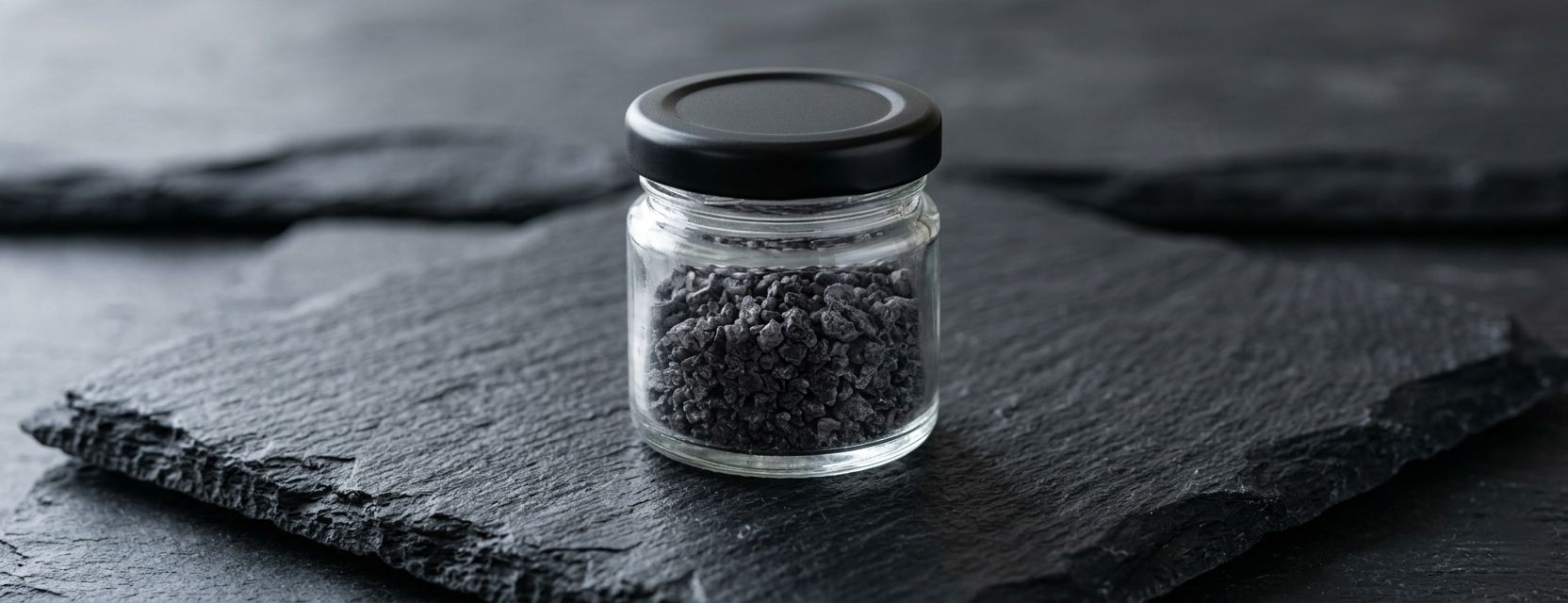
Boke black salt has a distinctive dark gray to black color, reflecting its volcanic mineral content. The crystals vary in size due to the hand-crushing process, from fine powder to small grains.
The taste is salty, but with a complexity that table salt lacks. Some describe subtle mineral notes, a slight earthiness that reflects its volcanic origin. When dissolved in water, it imparts a faint color—a reminder that this is a complete food, not a refined isolate.
Storage
Store in a cool, dry place away from direct sunlight. Because Boke salt contains no anti-caking agents, it may clump slightly in humid conditions. This does not affect its quality. Simply break apart any clumps before use.
Shelf Life
Properly stored, Boke salt remains potent indefinitely. As a mineral salt, it does not spoil or degrade. The traditional methods of production have preserved it for centuries; it will preserve for you as well.
Pricing
The Rotational Mineral Priming Program is the only way to access our rare, traditionally harvested full-spectrum mineral salts. We do not sell them separately. We reserve them for those committed to deep terrain repair and need more than surface-level support. People simply wanting to buy salts will not find what they need here. People desiring to restore their inner garden have found the right place. Beginners trying basic terrain restoration can start with Rift Valley Alkaline salt, effective and easily sourced from local markets and supermarkets across Kenya.
This is not a commercial product. It is a traditional material made available to those who understand its value.
A Volcanic Treasure for Terrain Restoration
Black Salt from Boke is not a seasoning. It is not a luxury condiment. It is a therapeutic tool—a link to one of the most ancient and dramatic salt harvesting traditions on earth.
After the fast clears the debris, the body must be restored before it can be replenished. For some, that restoration requires more than the usual minerals. It requires the particular signature of volcanic earth—iron for the blood, sulfur for detoxification, and the full spectrum of trace elements that only ancient volcanic processes can provide.
The Borana people have known the value of this salt for over a thousand years. They have harvested it from the dark waters of El Sod, passed down the knowledge through generations, and preserved the crater for future generations.
Table salt cannot do this work. It was never designed to. It flavors food. It prevents iodine deficiency. It does not restore terrain.
Boke salt does.
After you have fasted, after you have cleared what accumulated, give your body what it actually needs. Give it the volcanic minerals it has been waiting for. Give it Black Salt from Boke.
Summary
| Attribute | Detail |
|---|---|
| Origin | El Sod volcanic crater, southern Ethiopia |
| Name meaning | "House of salt" in Borana language |
| Harvesting community | Borana people, 63-family cooperative |
| Harvest method | Diving into crater lake, hand-digging salt mud |
| Harvest season | Peak December-January (end of rainy season) |
| Processing | Water separation, hand-crushing, sun-drying |
| Grades | Ilkole (highest, for human consumption) |
| Mineral profile | Sodium, potassium, magnesium, calcium, iron, sulfur compounds, trace elements |
| Distinguishing feature | Dark color from iron and volcanic minerals; harvested by diving |
| Role in protocol | Sequence Two: Terrain Renovation |
| Use | ¼-½ tsp in 500ml warm water after fasting |
The Terrain Repair Method
Cleanse. Restore. Replenish.
Black Salt from Boke is a traditional food, not a medicine. The information provided is for educational purposes based on traditional knowledge and our research. Consult your healthcare provider before beginning any fasting or dietary protocol