
How Alternating Minerals Deepens Terrain Restoration

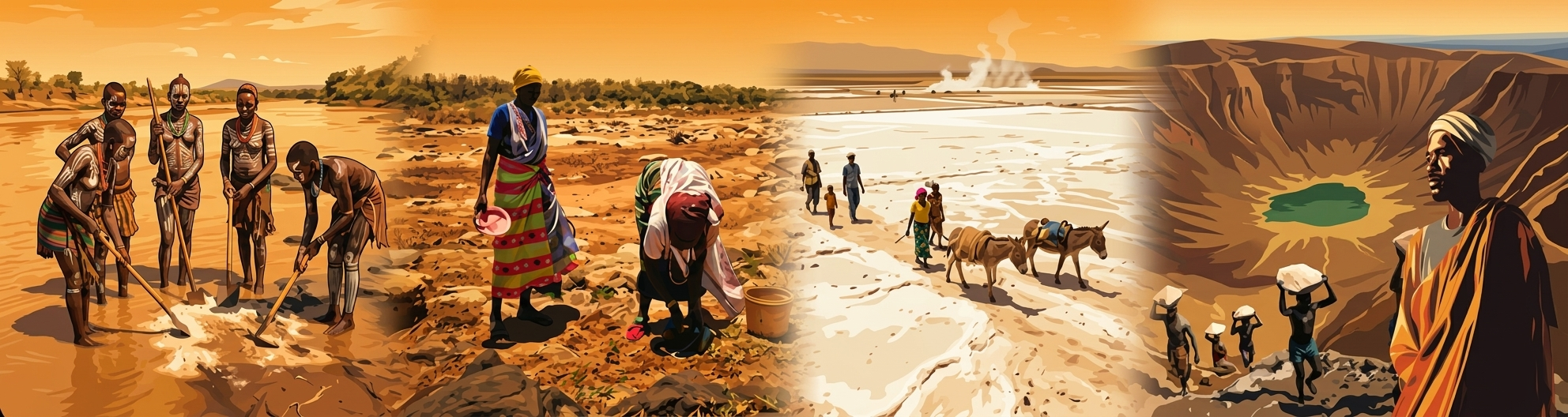
"Why do I need to rotate the salts? Why can't I just pick one and stick with it?"
It is the question we hear most often in the Terrain Repair foundational program. The question makes sense. The salts we source, Baleni Spring Salt from South Africa, Omo River Plant Ash Salt from Ethiopia, and Black Salt from Boke in southern Ethiopia, are each remarkable in their own right. Each contains a full spectrum of minerals. Each has its own distinct profile. Each, on its own, can restore what the fast has depleted.
So why rotate?
The answer lies in understanding what the terrain actually is, and what it needs to be fully restored.
The body is not a simple machine that requires one fuel. It is a complex ecosystem that evolved to receive nutrients from diverse sources. The pastoral communities who taught us did not consume a single salt. They moved across the land, accessing different sources depending on where their herds traveled, depending on the season, depending on what their bodies told them they needed.
They understood something that modern nutrition has forgotten: the terrain requires variety. Not just variety in food. Variety in minerals.
One Salt Is Not Enough
Every salt we source is complete. That is not the issue. Baleni salt contains a full spectrum of minerals. Omo River salt contains a full spectrum. Rift Valley salt contains a full spectrum. Boke salt contains a full spectrum.
But they are not the same spectrum.
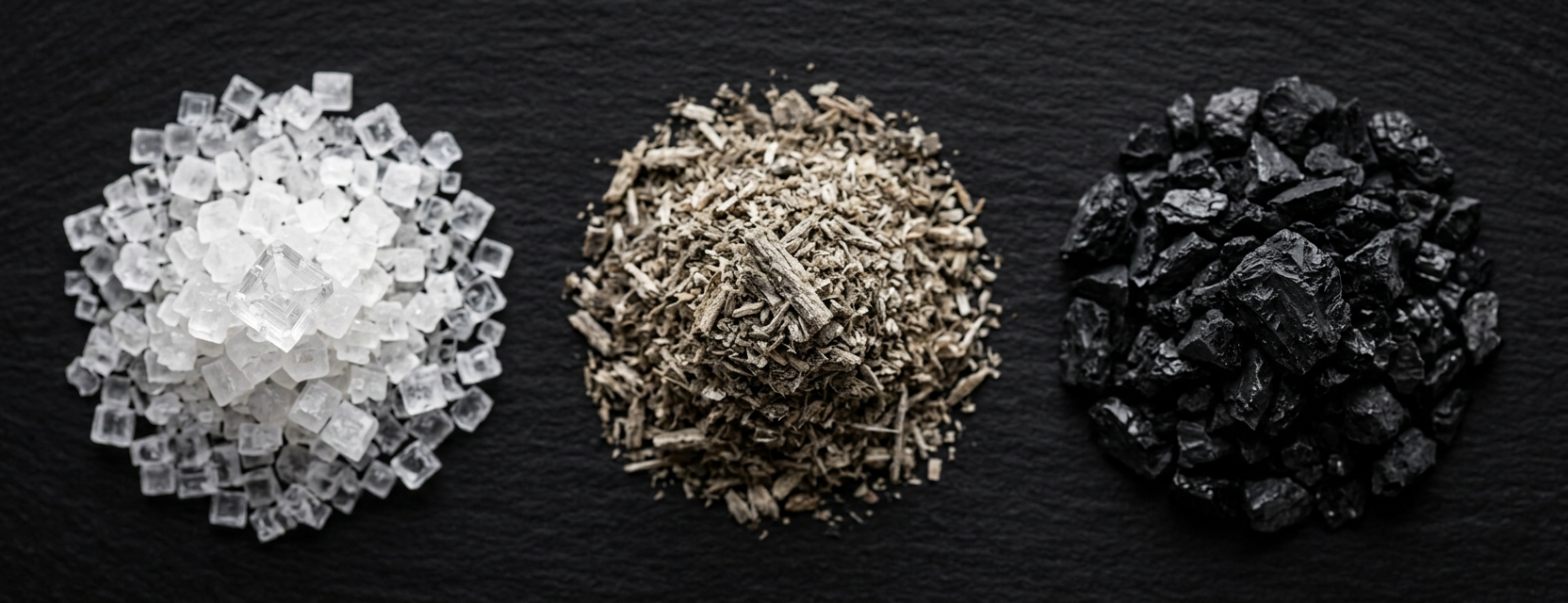
- Baleni Spring Salt emerges from a geothermal spring in South Africa, drawn from ancient geological formations that include fossilized seabeds. Its mineral profile is balanced, with notable levels of magnesium, calcium, and trace elements in ratios that support general cellular function.
- Omo River Plant Ash Salt is derived from plants that grew along the Omo River in Ethiopia. Because it comes from plant tissues, its minerals are organically complexed, bound to organic molecules that the body may process differently. It is notably higher in potassium than sodium, making it particularly valuable for cardiovascular support.
- Black Salt from Boke is harvested from the depths of a volcanic crater in southern Ethiopia. Divers plunge into dark waters to bring up mineral-rich mud. Its iron content gives it its dark color, and its volcanic origin provides a distinct profile of sulfur compounds and trace elements. Each salt is complete. But each is complete in a different way.
Dr. Sarah Mbugua, the gastroenterologist who has worked with TerraFix participants, explains the significance.
"Imagine you have been eating a diet deficient in minerals for decades. Your body is not just missing one mineral. It is missing dozens. It is missing the synergistic relationships between minerals. When you introduce a single salt, even a complete one, you are giving the body one version of completeness. But the body evolved to receive minerals from multiple sources. The terrain is not a single lock that a single key opens. It is a complex system that requires multiple inputs to fully restore."
This is why rotation matters. The terrain is not just depleted. It is depleted across a spectrum. Restoring it requires addressing the full range of deficiencies, and different salts address different aspects of the deficiency.
What Science Says
The scientific literature on mineral diversity is surprisingly sparse, not because the topic is unimportant, but because it has been largely ignored by a nutrition research establishment focused on single nutrients.
What does exist, however, supports the intuition that variety matters.
Synergistic Mineral Interactions
Minerals do not work in isolation. Magnesium is required to activate vitamin D, which is required to absorb calcium. Zinc and copper must remain in balance; an excess of one can create a deficiency of the other. Selenium and iodine work together to support thyroid function.
A 2023 review in the journal Nutrients noted that "mineral deficiencies rarely occur in isolation" and that "restoration of mineral status requires attention to the full spectrum of interacting elements."
Providing a single mineral profile, even a complete one, may not address the specific imbalances that have developed over years of deficiency. Rotating profiles increases the likelihood that all deficiencies will be addressed.
Bioavailability Variation
Different mineral sources have different bioavailability. The form in which a mineral is presented affects how well the body can absorb and use it.
A 2021 study comparing mineral absorption from different salt sources found that bioavailability varied significantly depending on the mineral matrix. Minerals from plant-based salts were absorbed differently from minerals from geological salts. Minerals from volcanic sources had different absorption kinetics than minerals from marine sources.
The authors concluded that "diverse mineral sources may provide complementary benefits" and that "reliance on a single source may leave certain absorption pathways underutilized."
The Terrain as Ecosystem
Perhaps the most compelling framework comes not from nutrition science but from ecology. Dr. Leon Matata, the sociologist who has studied traditional health systems, puts it this way:
"The body is not a factory. It is a garden. A factory requires a single fuel. A garden requires diverse inputs. You cannot feed a garden the same fertilizer every season and expect it to thrive. The soil needs variety. The minerals need to come from different sources. That is what the pastoral communities understood. That is what we have rediscovered."
Our Rotation Protocol
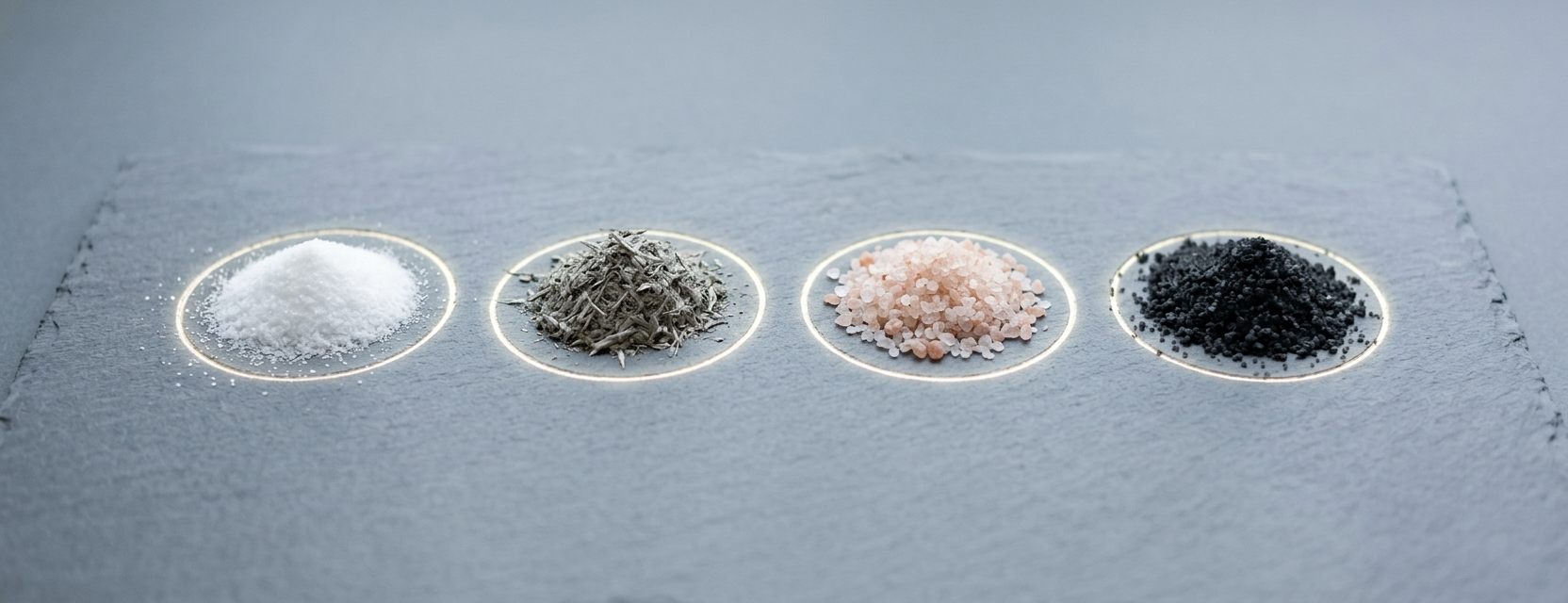
In the RMP program, participants rotate through the four salts over the course of the three-month protocol.
The standard rotation:
- Week 1-2: Baleni Spring Salt — Establishing mineral balance
- Week 3-4: Omo River Plant Ash Salt — Supporting potassium-sodium balance
- Week 5-6: Inland Alkaline Lake Salt — Deep alkalization and connective tissue support
- Week 7-8: Black Salt from Boke — Iron and volcanic mineral replenishment
- Week 9-12: Rotation continues with shorter intervals (3-4 days per salt)
Participants require different sequences based on their specific conditions. Those with hypertension may spend more time on Omo River salt. Those with connective tissue issues may extend the Inland Alkaline Lake Salt. Those with anemia may need additional time on Boke salt.
But the principle remains constant: the terrain receives multiple mineral profiles over time, addressing the full spectrum of deficiency that a single source cannot reach.
Why Rotation Works
Dr. Sarah Mbugua has been following TerraFix participants for three years. She has seen the outcomes firsthand.
"What I observe is that participants who rotate through the salts consistently report better outcomes than those who use a single salt. Their markers improve more dramatically. Their symptoms resolve more completely. Their energy returns more fully."
She grounds her observations in physiology.
"The body has multiple mineral transport systems. Different minerals are absorbed through different pathways. Some are absorbed in the small intestine. Some in the colon. Some require specific transporters. Some are absorbed passively. When you provide minerals from a single source, you are only engaging one subset of these pathways. When you rotate, you engage multiple pathways over time. The terrain receives what it needs through the channels that were designed to receive it."
She also notes the role of the gut microbiome.
"We are increasingly understanding that the gut bacteria play a critical role in mineral absorption. Different bacteria process different mineral forms. A diverse mineral intake supports a diverse microbiome. A diverse microbiome supports better mineral absorption. It is a virtuous cycle."
Dr. O'Sullivan's Perspective
Dr. James O'Sullivan is a general practitioner based in London who has been working with Terra participants for the past eighteen months. He initially became interested in the program through a patient who had reversed her chronic fatigue.
"I had a patient who had been under my care for five years. She had chronic fatigue syndrome. She had tried everything. Nothing worked. Then I did not see her for a while. When she came back, she was different. She had energy. She looked alive. She told me about this program. I cannot explain why she improved. I cannot attribute it to the program with certainty. But I documented the change in her condition, and I continue to observe."
Dr. O'Sullivan was skeptical but curious.
I asked her to send me the materials. I read them. My reaction was: this is interesting, but where is the evidence? She looked at me and said: the evidence is my body. I could not argue with that. I am not prepared to endorse the program. I do not fully understand the mechanisms. But I cannot ignore the change I witnessed in that patient. That is why I am still paying attention."
Since then, Dr. O'Sullivan has observed the program's effects in multiple participants.
"What I see is consistent across cases. Patients who complete the three-month protocol, rotating through the salts, show improvements that conventional medicine cannot easily explain. Inflammation markers drop. Energy improves. Medication reliance decreases. Some have reversed conditions I was taught were irreversible. I do not yet understand why. But I cannot dismiss what I am seeing."
He is particularly interested in the rotation aspect.
"The diversity of mineral sources makes physiological sense to me. The human body evolved in environments where mineral sources were varied. African pastoral communities did not consume the same salts every year. They moved across landscapes, accessing different springs and different geological formations. The rotation mimics this natural diversity. That is not proof of efficacy. But it is a sound hypothesis, and the outcomes I have observed give me reason to take it seriously."
Dr. O'Sullivan is careful not to overstate.
"I cannot formally endorse this program. I am still studying it. I do not yet fully understand the mechanisms, but I have observed results in participants that are difficult to dismiss. The salts are the second step of a sequence that includes fasting, a two-hour wait, and broth. I have observed that when the inner environment is restored, the body functions better. Symptoms improve. Sometimes they disappear. Sometimes they become manageable. Quality of life improves. That is what medicine should aim for. I continue to study the evidence."
What Happens Inside
The process by which salt rotation restores the terrain is not mysterious. It follows a predictable sequence.
Phase One: Correcting Acute Deficiencies
The first time the body receives full-spectrum minerals after a fast, it corrects the most immediate deficiencies. Magnesium levels rise. Potassium is restored. Calcium becomes available. This is why participants often feel immediate relief. The body is receiving what it has been missing.
Phase Two: Addressing Chronic Imbalances
After the acute deficiencies are corrected, the body begins to address chronic imbalances. The sodium-potassium ratio improves. Magnesium-calcium balance is restored. Trace element deficiencies are corrected.
This phase takes longer. It is why the protocol requires months, not days.
Phase Three: Restoring Mineral Systems
As minerals are restored, the systems that depend on them begin to function properly. The nervous system, which requires magnesium for relaxation, becomes calmer. The cardiovascular system, which requires potassium for regulation, becomes more stable. The digestive system, which requires a full spectrum of minerals for enzyme function, begins to work as it should.
Phase Four: Terrain Regeneration
Finally, with the mineral foundation restored, the terrain itself regenerates. The gut lining, which depends on minerals for repair, becomes whole. The microbiome, which depends on minerals for diversity, becomes robust. The cells, which depend on minerals for energy production, become efficient.
This is what the rotation achieves. Each salt contributes to this process in a different way, addressing different aspects of the deficiency, engaging different absorption pathways, supporting different systems.
The Wisdom of Diversity
The pastoral communities who taught us did not rotate salts because they had read a research paper. They rotated because they observed that their bodies responded differently to different sources. They noticed that salt from one spring made them feel one way. Salt from another spring made them feel another way. Over generations, they learned that the body needs variety.
Modern nutrition has lost this wisdom. We have been taught that minerals are interchangeable, that a magnesium supplement is a magnesium supplement, that any salt will do. But the body knows better.
The rotation is not complicated. It is not expensive. It is not difficult. It is simply giving the body what it has been missing, diverse minerals from diverse sources, delivered in the sequence that allows the terrain to open and receive.
The Terrain Repair Method
Cleanse. Restore. Replenish.
The salt rotation is a core component of the foundational Terrain Repair program. It is not a medical treatment. Consult your healthcare provider before beginning any fasting or dietary protocol. Individual results vary.