
Scientist Visits Kenyan and South African Salt Sources

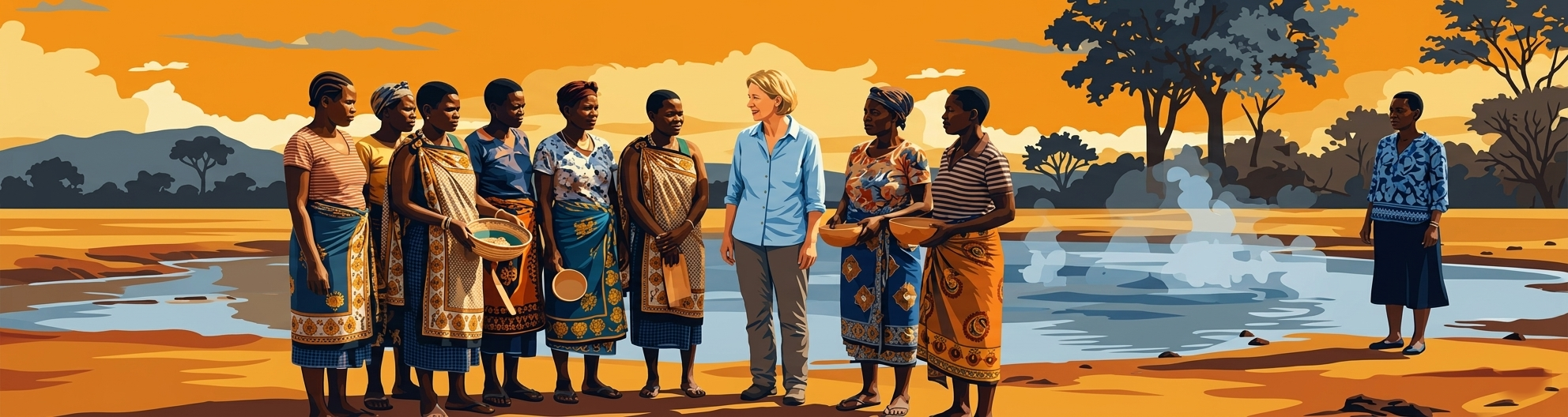
Dr. Sarah Chen, a food scientist from the University of Guelph in Ontario, Canada, visited Lake Magadi on October 15, 2024, to collect salt samples for laboratory analysis. She was accompanied by Ms. Mouryn Atieno, Research Coordinator for Terra, a Kenyan-based educational collective focused on terrain restoration. The visit was part of a broader sampling trip that also included Lake Victoria in Kenya and the Baleni Springs in South Africa.
Dr. Chen specializes in mineral analysis of traditional food products. Her interest in the salt samples is analytical. She has no affiliation with Terra beyond this sample collection arrangement, and she does not endorse any health claims associated with the salts. Her role is to collect, analyze, and report the data. That is what she did.
Lake Magadi
Dr. Chen and Ms. Atieno traveled to Lake Magadi, a vast alkaline lake in the southern Rift Valley known for its naturally occurring salt deposits. The lake is fed by hot springs that rise from deep underground, carrying minerals leached from volcanic rocks. When the water evaporates under the sun, it leaves behind a thick crust of salt.
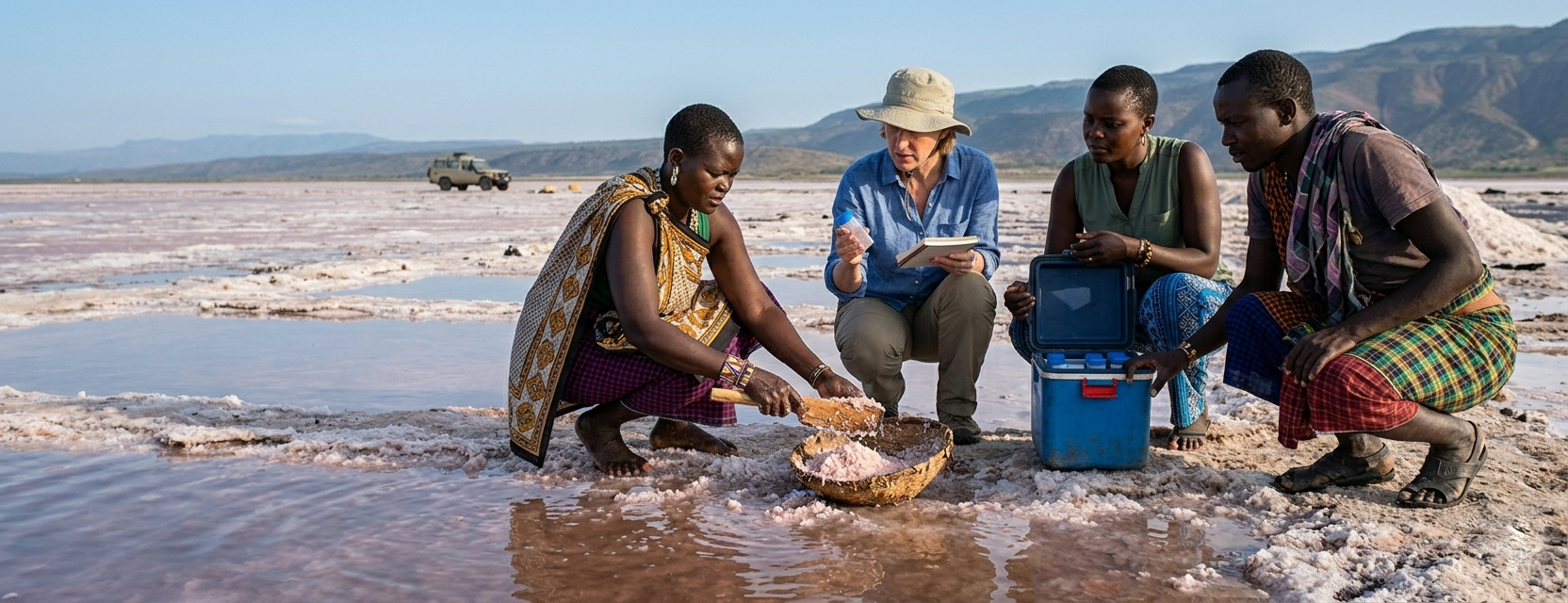
Ms. Atieno guided Dr. Chen to sections of the lake where traditional harvesters collect salt. The process has remained unchanged for generations. Harvesters scrape the salt crust from the surface, collect it in containers, and transport it for cleaning and use.
Dr. Chen collected salt samples from multiple locations on the lake using sterile containers. Each sample was labeled with the date, time, and precise GPS coordinates. She also collected a water sample from a hot spring feeding the lake.
"The water chemistry influences the salt composition," she noted. "It is useful to have both."
Ms. Atieno documented each collection point for Terra's internal records.
Lake Victoria
From Lake Magadi, Dr. Chen and Ms. Atieno traveled to Lake Victoria, where Dr. Chen collected samples of Ebara salt. Ebara salt is harvested from the lake's shores by traditional communities and is known locally for its distinct mineral profile, particularly its potassium content.
Local harvesters demonstrated their methods. The process is different from Lake Magadi. The salt here is not a surface crust but is extracted from the soil along the shoreline. The collected material is dissolved in water, filtered, and boiled to produce pure salt crystals.
Dr. Chen observed the process, took samples, and documented each location. Ms. Atieno coordinated with the harvesters and recorded their descriptions of the salt and its uses.
Baleni Springs, South Africa
From Kenya, Dr. Chen traveled to South Africa, accompanied by Ms. Atieno, to visit the Baleni Springs in Limpopo Province. The Baleni Springs are a geothermal source where Tsonga women have harvested salt for over two thousand years. The site is a Natural Heritage Site, and the salt is collected using traditional methods that have remained unchanged for centuries.
The Tsonga women harvest the salt by hand during the dry winter months. The water emerges from deep underground, having passed through ancient fossilized seabeds, carrying a full spectrum of minerals. The women collect the salt-encrusted mud, filter it through traditional systems called xinjhava, and boil the brine over open fires.
Dr. Chen collected samples of Baleni salt, documenting the spring environment and the harvest process. Ms. Atieno recorded the visit, noting the conditions and the harvesters' descriptions of their traditional methods.
"The Baleni Springs are a unique geological feature," Dr. Chen said. "The water emerges from deep underground, having passed through ancient geological formations. The mineral profile of the salt reflects that journey."
The Samples
At each location, Dr. Chen followed the same protocol. Observe the harvest process. Collect samples using sterile containers. Label each sample with the date, time, GPS coordinates, and any relevant environmental conditions. Store the samples in a cooler for transport.
By the end of the trip, Dr. Chen had collected samples from three distinct geological sources: the volcanic Rift Valley, the freshwater lake shores of Lake Victoria, and the geothermal springs of Baleni. Each source produces salt with a different mineral signature. Each sample is now documented and stored, awaiting shipment to Canada.
What Happens Next
The samples will be shipped to the University of Guelph for analysis. Dr. Chen will test for mineral composition, heavy metal content, pH, and other parameters. The process will take several months.
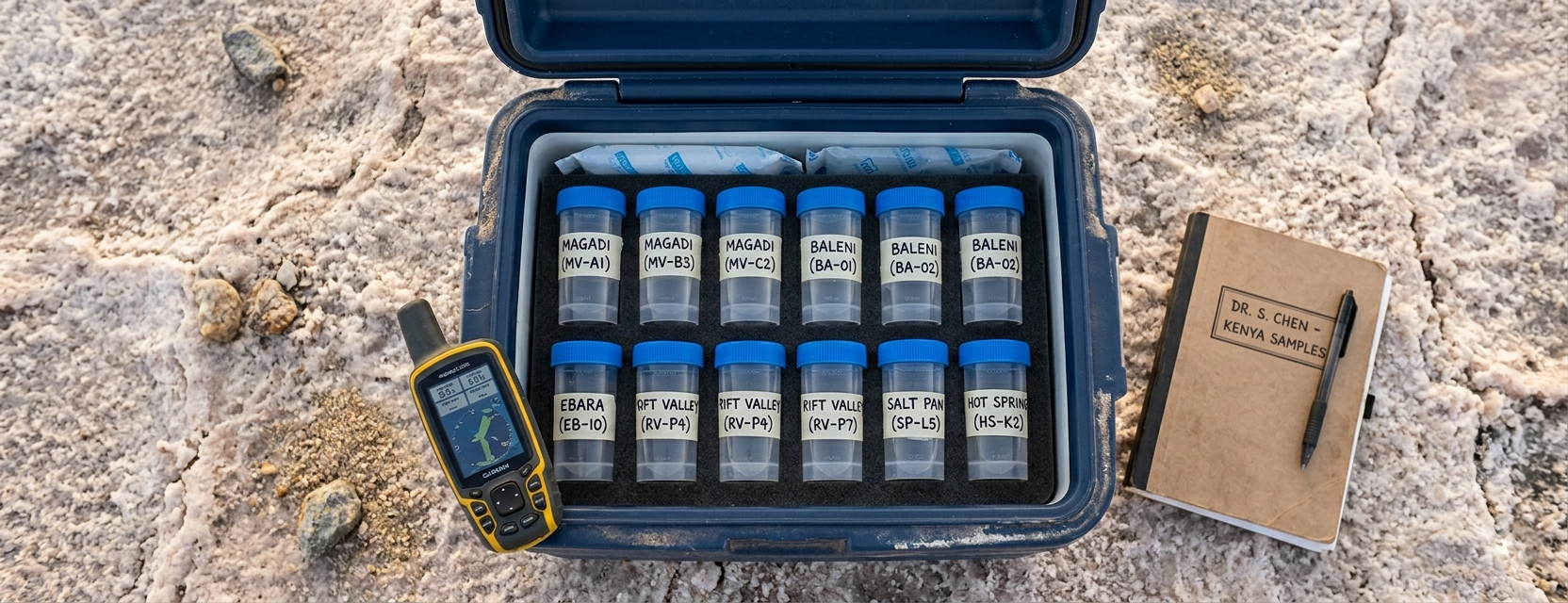
Ms. Atieno will serve as the liaison between Dr. Chen and Terra, receiving the results and preparing them for release. When the analysis is complete, Terra will share the findings with its participants and the public.
Dr. Chen offered no prediction of what the analysis will show. "I do not speculate on results before conducting the analysis," she said. "That would be unscientific. When the data is ready, it will speak for itself."
The analysis will take more than twelve months. Salt testing is not a single procedure. Each sample must be analyzed for mineral composition, heavy metals, alkalinity, and iodine content. Different tests require different instruments, different preparations, different protocols. With over thirty samples collected from three countries, the work is substantial. Dr. Chen is thorough. She does not rush. When the results are ready, they will be reliable. Until then, we wait.
Dr. Sarah Chen and the University of Guelph have no affiliation with Terra. Dr. Chen was invited to collect samples for laboratory analysis. She does not endorse Terra or any health claims associated with its products or program. The analysis results are pending and have not yet been released. Terra is an educational framework. It is not a medical treatment, diagnosis, or cure.
You should also read:
Terra Partners with the University of Guelph to Analyze Africa's Traditional Salts
The University of Guelph has analyzed salt samples collected by Terra. Dr. Sarah Chen, a food scientist in the Department of Food Science, led the analysis. Her research focuses on traditional food systems and their scientific documentation. The collaboration was a natural fit.